9 May 2025
Swiss quality in the face of a new world order
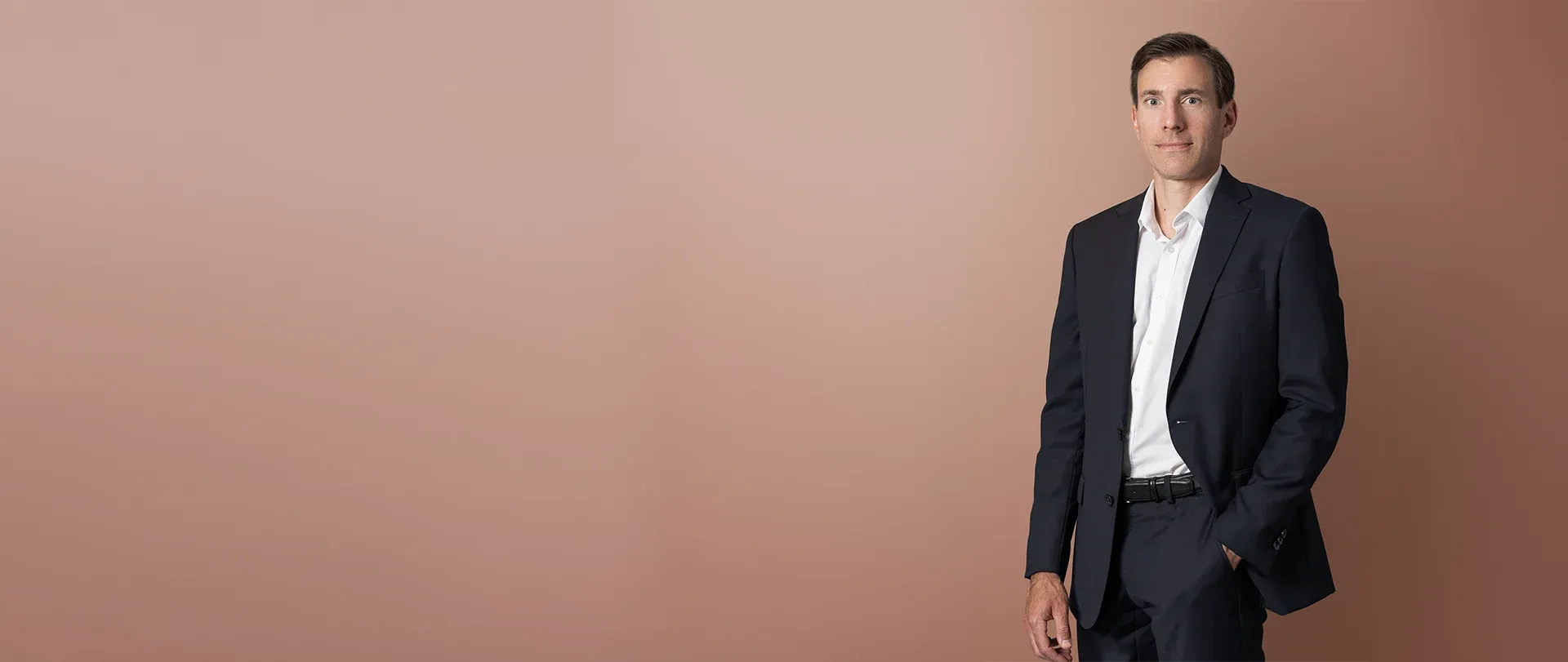
A column by Raphaël Membrez
Published in Allnews - May 2025
All very tough on us?
We thought that recent history had taught us a few lessons in resilience…
Donald Trump preferred to brandish a small-format placard, no doubt in order to better withstand the strong wind of that day, to unveil big figures that triggered a storm. These figures are the tariffs imposed on the trading partners of the United States, sternly portrayed by the president on that 2 April. The European Union, threatened with a tariff of 20 per cent, "may look nice on the surface but it rips us off so often, it's sad and pathetic," he then declared.
Bargaining lever in the face of the dollar's ascent
The Bretton Woods agreements of 1944, which formalised the role of the US dollar as the international reserve currency, offer a key to reading the current earthquake. The structural demand for the greenback is said to have led to its appreciation and to asymmetries in trade, penalising American competitiveness. According to Donald Trump, the loss of industrial capacity has even weakened American defence. All this justifies a state of emergency, with as a remedy the deployment of reciprocal tariffs in order to rebalance global trade.
Microeconomic
aspect
As a small open economy, Switzerland and its companies are not spared by such sanctions. Non-exhaustive in many respects, our analytical framework makes it possible to estimate their impact. Our universe of 44 Swiss companies covers 75% of the Swiss Performance Index (SPI) and shows an average exposure to tariffs of between 5 and 6%, which rests on a US sales share of 25%, of which the imported share amounts to 20%. Companies' capacity to absorb this shock is decisive. All else being equal and faced with a tariff of 31%, 11% of the firms would have to increase their prices by between 5 and 10%, 23% would have to increase them by between 1 and 5%, while 66% would not be affected, or only slightly, with a necessary price increase of less than 1%. Several reasons explain this low exposure.
Some players serve a purely domestic market, like Galenica, while others are weakly exposed to the US, like Geberit. Nestlé or Lindt & Sprüngli produce where they sell, dietary habits favouring local production, while Sika and Holcim, construction players, produce locally to meet local requirements. Conversely, a minority of players import all or a large part of their American sales. They produce medical, industrial or computing components assembled partly in Switzerland, for those with high added value, and partly in low-cost countries for components with basic functionalities where volume predominates.
The power of price
Pricing power offers a powerful lever making it possible to absorb all or part of the tariffs. A price increase of 1% allows a company with a margin of 15% and a cost base equal to 85% of its sales to increase its operating profit by 7%. Pricing power can be detected through more or less tangible attributes. Sika's capacity to invent formulations that improve the properties of concrete can justify a price increment. The dominant position of VAT, a manufacturer of vacuum valves that holds nearly 75% market share in its semiconductor segment, favours the taking of price. Geberit delivers its sanitary products through distributors, which reduces the buyer's bargaining power. Non-Swiss, but illustrative, the business model of the Italian manufacturer Ferrari exploits the scarcity effect associated with a low price elasticity, which allowed it to announce a price increase of up to 10% on its American models in order to counter the 25% tariffs on automobiles imported from the EU.
Favoured by pricing power, a high margin provides a second level of absorption. The example of a Swiss group that sells 19% of its sales in the United States, all imported from Switzerland, and whose gross margin amounts to 80%, can absorb at the gross-profit level almost all of a 31% tariff. Beyond the factors mentioned, many Swiss companies have a flexible production chain, like Sulzer, which could repatriate part of the production of its pumps from Mexico to the US.
Resilience in a period of uncertainty
No one can predict with precision the impact of a reconfiguration of the world trade order. Nevertheless, attempting to identify the resilient business models capable of protecting their margins and their cash generation remains within our control.
Raphaël Membrez is a fund manager, member of the Swiss equities conviction management team and responsible for a conviction fund on European equities. Previously, he was an analyst and co-manager of a Swiss equities fund at Landolt & Cie (currently ODDO BHF). He completed an Executive Program at HEC Paris, holds a Master in Finance from Warwick Business School, a Bachelor from the University of Fribourg (Magna cum laude) and is a CFA charterholder.